


On the historical women who were silenced for knowing too much—and the fictional ones I built in their image.
On the evening of February 1, 1922, Mabel Normand left the Los Angeles bungalow of director William Desmond Taylor in a happy mood, carrying a book he had lent her. They blew kisses to each other as her limousine drove away.
She was the last person known to have seen him alive.
By the next morning, Taylor was dead—shot in his home in a case that would never be solved. And Mabel Normand, one of the most powerful women in American film, began to disappear.
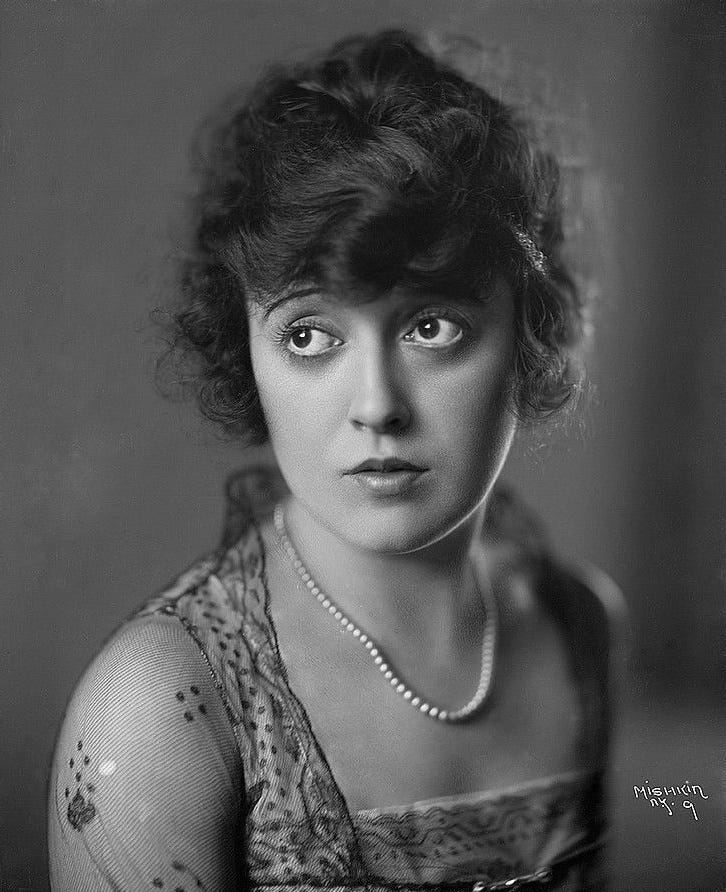
A Career Built and Buried
Normand was no ordinary actress. She directed films. She produced them. She ran her own studio and production company. She appeared in twelve films with Charlie Chaplin and seventeen with Roscoe “Fatty” Arbuckle, sometimes writing and directing the films in which Chaplin was her leading man. She was credited with persuading Mack Sennett to give Chaplin a second chance after his disastrous first film. Without her intervention, his career might have ended before it began. Her 1914 film Mabel’s Strange Predicament was the first screen appearance of Chaplin’s legendary “Tramp” character.
But the crime scene at Taylor’s bungalow was contaminated before police arrived. At least one studio troubleshooter entered the house and either removed or planted evidence. A corrupt district attorney named Thomas Woolwine focused his investigation on Normand to generate press headlines—despite clearing her as a suspect. The tabloid press obliged. And when, two years later, Normand’s chauffeur—an escaped convict named Horace Greer, operating under the alias Joe Kelly—shot a millionaire named Courtland Dines with Normand’s own pistol at a party, the industry she had helped build simply closed its doors.


