


One of the occupational hazards of writing historical fiction is falling in love with details your readers will never believe.
History does not care about plausibility. It simply happened. And some of what happened is so strange, so perfectly suited to fiction, that putting it in a novel feels like cheating.
Here are five details I encountered in my research that I could not have invented—and that have influenced, or directly appeared in my work.
1. Courtrooms Were Held in Saloons—and Worse
In many frontier towns, there were not enough proper buildings for civic functions. Trials were conducted in the same rooms where men drank whiskey the night before. Justice on the frontier was improvised.
In Shoot Like a Girl, the prequel novella to the Annie Oakley Mystery series, Annie must testify in a jailhouse setting. No marble halls. No elevated bench. Just a woman standing her ground in a space that was never designed to take her seriously. The indignity of the setting becomes inseparable from the stakes of the scene—because where justice is administered says everything about who it was built to serve.
2. Annie Oakley Could Split a Playing Card Edge-On and Riddle It Before It Hit the Ground
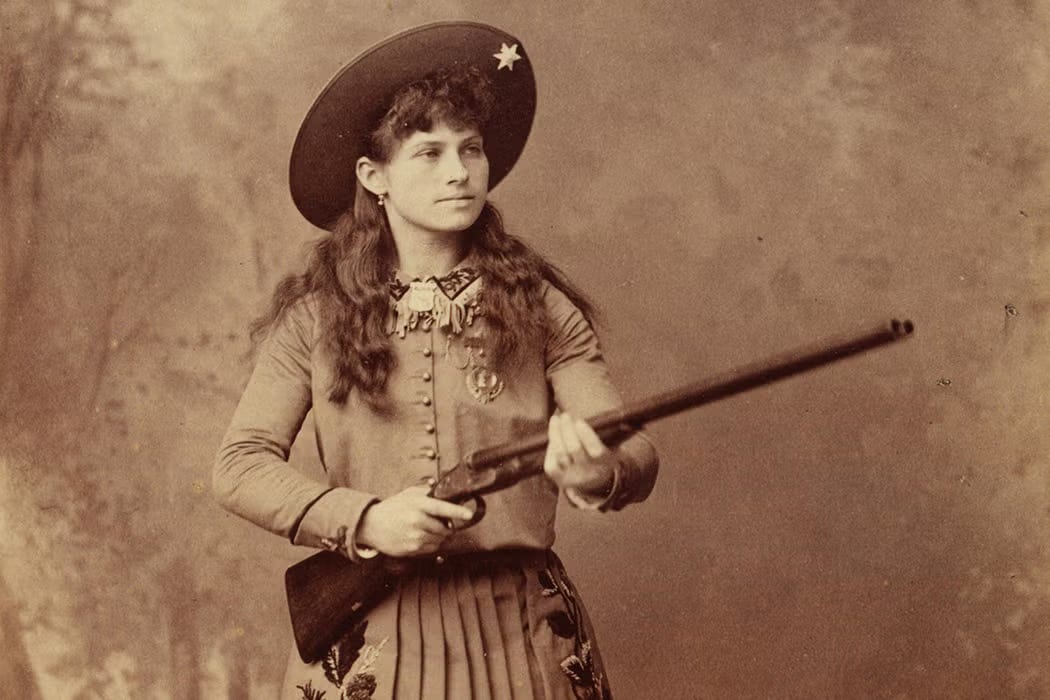
This is not legend. It is documented. At ninety feet, using a .22 caliber rifle, Annie could split a playing card held on its thin edge—and then put five or six more holes through it before it touched the ground. She shot dimes tossed into the air. She snuffed lit candles with a single bullet and uncorked bottles without breaking the glass. In Berlin, the Crown Prince of Germany insisted she shoot a cigarette from his mouth; she made him hold it in his hand instead. At sixty-two, she hit a hundred clay targets in a row from sixteen yards. When she died in 1926, her husband Frank Butler stopped eating. He followed her eighteen days later.
When I write Annie Oakley as a character, I never need to exaggerate. The real woman was already more extraordinary than most fictional heroes. The challenge is not making her impressive. It is making her just an ordinary woman with extraordinary talents.
3. Mourning Jewelry Was Woven from Human Hair
In the nineteenth century, it was common—and considered beautiful—to weave the hair of the dead into intricate brooches, rings, and watch chains. These were not macabre curiosities. They were acts of love, a way of keeping the departed physically close. But for a mystery writer, an object that is simultaneously sentimental and unsettling is difficult to resist. A mourning brooch can mean devotion. It can also mean obsession. And in the right hands, it can mean evidence.


