


Here is the thing about a lie: it doesn’t have to be good to work. It only has to be performed in a way the audience already wants to see. And there is no better proof of that than the story of a working-class butcher from Australia who convinced a remarkable number of people in Victorian England that he was a drowned aristocrat returned from the dead to claim a vast estate and an ancient title.
He was spectacularly unqualified for the role. But it hardly mattered. His audience was ready for him. Especially the dead man’s mother.
Roger Tichborne was born into a wealthy English Catholic family. He spent much of his childhood in France and then attended Stonyhurst College, a Roman Catholic boarding school in Lancashire, where he received a classical education including Latin and Greek. Then, like many young gentlemen of his rank and upbringing, he served in the army. This reserved young man was expected to inherit the Tichborne baronetcy and his family’s vast Hampshire estate.
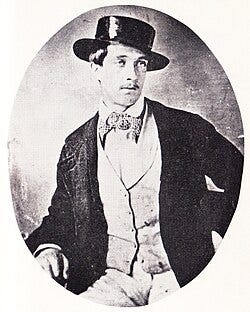
In 1853, Roger left England for South America, partly to put some distance between himself and his first cousin, Katherine, with whom he had fallen in love. Their families opposed the match, but eventually agreed that Roger should travel abroad for three years. If the two still wanted to marry when he returned, the matter would be reconsidered.


